Discover Short-Legged Cat Breeds in 2026
16/04/2026
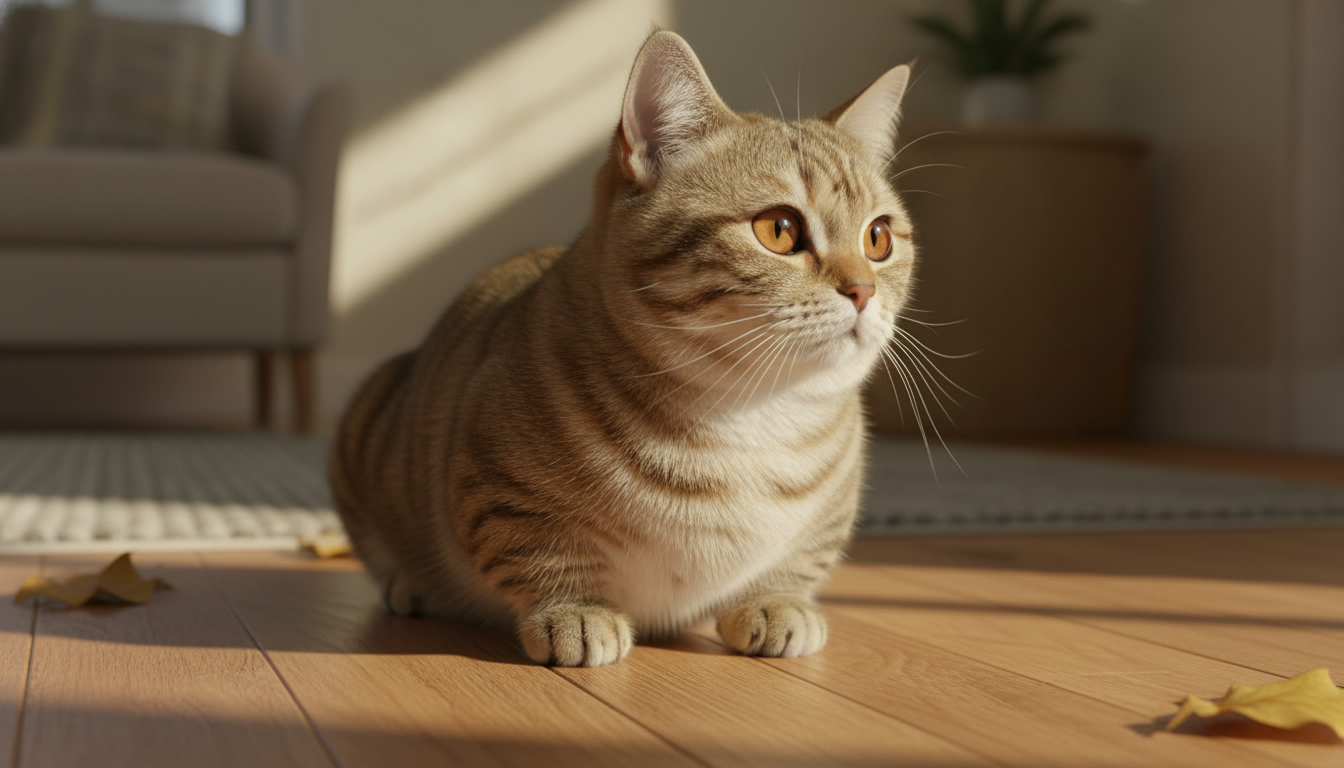
In brief, what you will discover in this article: the main short-legged cat breeds, their origins, physical and behavioral traits, as well as tips to better understand these unique cats before adoption.
1. Short-legged cat breeds: an overview
Short-legged cats fascinate with their unique silhouette and special charm. The most well-known short-legged cat breed is undoubtedly the Munchkin cat, resulting from a spontaneous genetic mutation. However, several other breeds exhibit this trait, each with its own physical and temperamental specificities.
These cats are not necessarily small in size, but they have shorter limbs than average, giving them a stocky and often very endearing appearance.
2. Iconic short-legged cat breeds
2.1 The Munchkin cat: the ultimate reference
The Munchkin cat is the most famous short-legged breed. Originating in the United States in 1983 thanks to a genetic mutation called achondroplasia, this breed has a normally sized body with disproportionate legs, giving it a unique look. Contrary to popular belief, it is not a miniature cat but a short-legged cat.
Its temperament is gentle and playful, making it an excellent companion. However, it is important to monitor its health, especially the joints, as the particular morphology can lead to specific problems.
2.2 The Cornish Rex and Devon Rex: short legs and soft coats
These two breeds stand out for their wavy coats and elegant appearance. The Cornish Rex and the Devon Rex have shorter legs than average, giving them a graceful and compact look. Their temperament is affectionate and lively, highly appreciated by cat lovers.
2.3 The Singapura and Korat: small, stocky cats with short legs
The Singapura, originating from Singapore, is one of the smallest domestic cats, weighing between 2 and 3 kilos. It has short legs and a compact body. The Korat, meanwhile, is a Thai cat with green eyes and a short coat, also endowed with short legs. These breeds are known for their gentle temperament and sociability.
2.4 Other short-legged breeds
Among other breeds with short legs are the Manx, the Egyptian Mau, as well as some varieties of Turkish Angora and Birman. These breeds are less well known but offer great morphological and behavioral diversity.
3. Common characteristics of short-legged cats
Short-legged cats share several physical and behavioral traits:
- Morphology: compact body, legs shorter than average, often stocky.
- Coat: varies by breed, from short and smooth to wavy or soft.
- Temperament: generally gentle, playful, and affectionate, with good adaptability.
- Health: some may have joint risks related to their build, so regular veterinary check-ups are important.
4. Why choose a short-legged cat?
Adopting a short-legged cat can be a great choice if you’re looking for a companion with a gentle character and original appearance. These cats are often very sociable and adapt well to apartment life.
Here are some reasons to consider this breed:
- Their compact size makes space management easier.
- Their calm temperament suits families and single individuals.
- Their unique look often attracts admiration and curiosity.
However, it is important to be well informed about the specific needs of each breed, especially regarding health and coat care.
5. Tips for caring for the coat of short-legged cats
Even though some short-legged cats have short coats, others have a more unique fur, like the soft coat of the Devon Rex. It is therefore essential to choose the right brush to ensure optimal care.
Here is a list of good brushing practices:
- Use a brush suited to the hair type (short hair, wavy hair, long hair).
- Brush regularly to avoid tangles and reduce shedding.
- Brush in the direction of the hair to avoid irritating the skin.
- Be gentle, especially around sensitive areas like the ears and belly.
To explore this topic further, you can check out our complete guide on choosing the ideal brush for dogs and cats with long hair, which will help you select the best tool depending on the breed and coat type.
6. Conclusion
Short-legged cat breeds offer fascinating diversity, both morphologically and behaviorally. Whether it’s the Munchkin cat or other breeds like the Cornish Rex, these cats captivate with their unique appearance and gentle temperament. Before adopting, it’s essential to understand their specific needs, especially concerning health and coat care. For tailored grooming, don’t hesitate to discover our expert advice on coat care during luxury travel.
To learn more about the genetic and morphological differences of short-legged cats, reading the Omlet article on the smallest cat breeds is highly recommended.

Claire Bertin
Passionnée par les animaux depuis toujours, je me suis spécialisée dans le toilettage et le soin du pelage des compagnons à poils. Avec plusieurs années d'expérience aux côtés de professionnels du monde animalier, j'ai développé une expertise pointue sur les techniques de brossage adaptées à chaque type de poil et race. Sur Brosseur.com, je partage des conseils clairs et pratiques pour aider les propriétaires à entretenir au mieux le pelage de leurs animaux, tout en respectant leur bien-être. Mon objectif est de rendre le brossage accessible à tous, en répondant précisément aux questions du quotidien avec sérieux et pédagogie.