Hair Definition and Essential Characteristics in 2026
10/04/2026
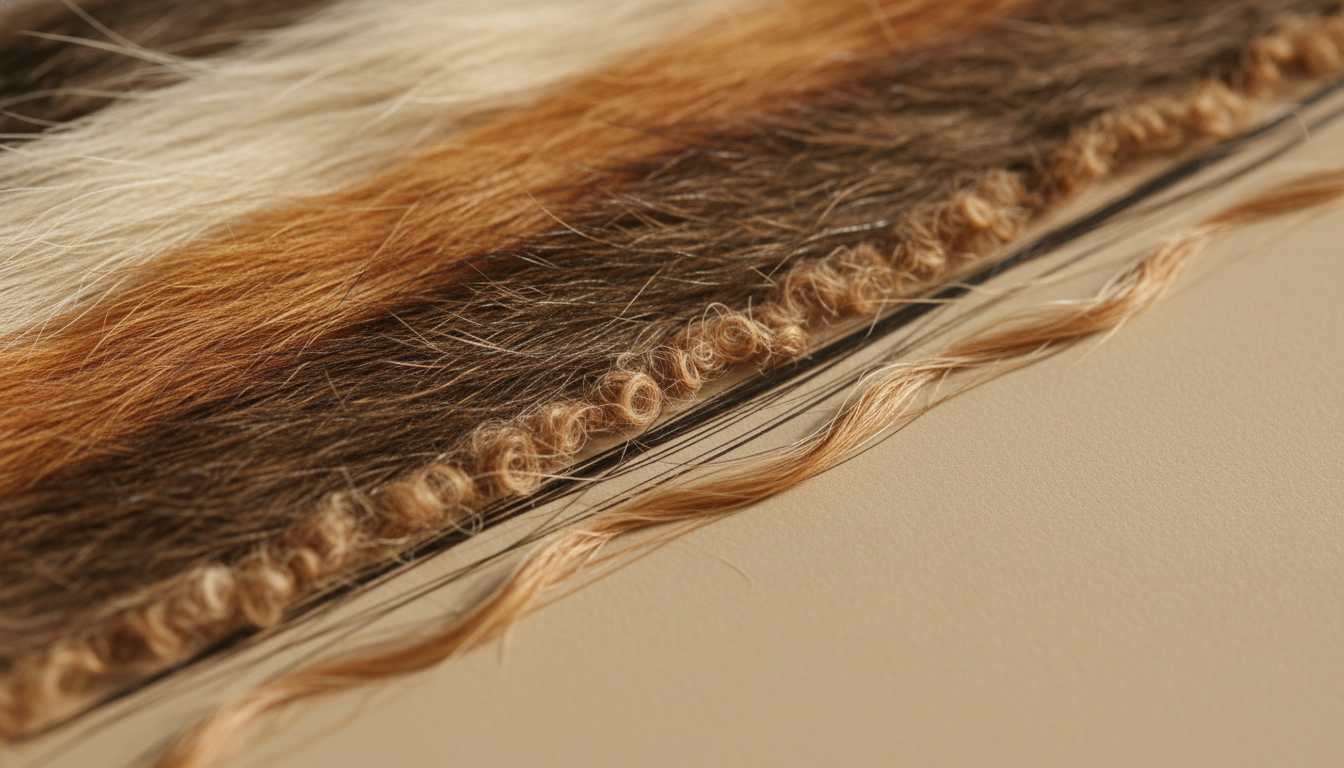
In short, what you will discover in this article: the clear and simple definition of hair, its structure, essential functions, as well as its differences from scalp hair. You will also understand its role in humans and animals, and how to properly take care of it.
1. Definition of Hair
1.1 Simple Definition for the General Public
Hair is a fine filament that grows on the skin of mammals, including humans. The term hair often refers to the small fibers that cover animal bodies, like the coat of a cat or dog. In humans, the word refers to body hair other than scalp hair or eyelashes, such as the beard or arm hair. The word is also used in common expressions, like "not having a dry hair on you" to say someone is soaking wet.
1.2 Scientific Definition (Terminology)
Scientifically, hair is a keratinized product of the epidermis, made up of dead cells forming a rigid filament. Each hair grows from a hair follicle located beneath the skin, where it develops before passing through the epidermis. Hair is a phaner, like nails or horns. Its structure and functions vary depending on species and body areas. For a complete and detailed definition, the Le Robert Dictionary is a reliable and accessible resource.
2. Anatomy and Structure of Hair
2.1 The Bulb and Dermal Papilla
Hair originates in the hair bulb, an area beneath the skin. This bulb contains the dermal papilla, a tissue rich in blood vessels that nourishes growing cells. This is where the hair root forms and gradually elongates.
2.2 The Hair Shaft: Cuticle, Cortex, Medulla
The visible part of the hair, called the hair shaft, is made up of three layers:
- The cuticle, the outer protective layer formed of overlapping scales.
- The cortex, the middle layer that gives the hair its strength and color.
- The medulla, the central part, sometimes absent, which can influence texture.
This complex structure explains the diversity of hair depending on its function and location.
3. Functions of Hair
3.1 Thermoregulation
One of the major roles of hair is thermoregulation. In animals, the coat acts as thermal insulation, retaining heat in winter and protecting from the sun in summer. In humans, body hair plays a lesser role, but scalp hair protects the head.
3.2 Protection and Barrier
Hair also serves as a barrier against external aggressions: it protects the skin from UV rays, insects, and limits injuries. For instance, eyebrow hairs prevent sweat from running into the eyes.
3.3 Sensory Function
Some hairs, like whiskers (vibrissae on cats), have a sensory role. They detect air movements and nearby objects, helping the animal better perceive its environment.
4. Types of Hair and Differences
4.1 Fine Hair vs. Thick Hair
Hairs vary in thickness and length. Fine hairs often form a light down, while thick hairs make up the main protective layer, called guard hairs. This distinction is important for choosing the right brush suitable for grooming your pet’s coat.
4.2 Hair, Scalp Hair, Bristles, and Feathers — Distinction
Although similar, hair and scalp hair mainly differ by their location and function. Scalp hair refers to long hairs on the human scalp. Bristles are stiff hairs found on some animals, while feathers are specific to birds. To deepen this distinction, you can check the article on the difference between hair and scalp hair.
5. Hair in Humans vs. Other Mammals
5.1 Distribution, Density, and Variations Across Species
Among mammals, hair density and distribution vary widely. Wild animals often have dense coats to protect against cold, while humans have sparser hair. This difference is explained by evolution and climate adaptations.
5.2 Evolution and Adaptations (Climate, Domestication)
Evolution has shaped hair according to needs: domesticated animals sometimes have softer or longer coats. Hair also adapts to climatic conditions, such as thick-haired northern dogs. These variations affect the recommended frequency and method of brushing.
6. Hair Issues and Care
6.1 Hair Loss: Causes and When to Consult
Hair loss can be natural (seasonal shedding) or linked to health problems like infections, allergies, or stress. If shedding is excessive or accompanied by itching, consulting a veterinarian is advised. To better understand risks related to animals, especially cats, see our article on cat disease transmissible to humans through saliva.
6.2 Hygiene and Maintenance
Proper coat care is essential for animal health. Regular brushing removes dead hair, prevents tangles, and stimulates blood circulation. Choosing a suitable pet hair removal brush facilitates this task and improves your companion’s well-being.
7. Glossary and Expressions Around the Word "Hair"
7.1 Synonyms, False Friends, and Idiomatic Expressions
The word hair appears in many French expressions, such as:
- Stroke someone the right way (to flatter someone).
- Not have a dry hair on you (to be completely wet).
- By a hair’s breadth (a very small difference).
These expressions enrich the language and show the important place of hair in our culture.
8. Conclusion
Hair is much more than a simple filament on skin. Its complex structure and varied functions make it an essential element for protection, sensation, and thermal regulation in mammals. Understanding the difference between hair and scalp hair, as well as proper care, is useful for better looking after your pets. To deepen your knowledge, feel free to explore our tips on brushing and coat care.
For a clear and complete definition of the term hair, the Le Robert Dictionary remains a key reference.
Claire Bertin
Passionnée par les animaux depuis toujours, je me suis spécialisée dans le toilettage et le soin du pelage des compagnons à poils. Avec plusieurs années d'expérience aux côtés de professionnels du monde animalier, j'ai développé une expertise pointue sur les techniques de brossage adaptées à chaque type de poil et race. Sur Brosseur.com, je partage des conseils clairs et pratiques pour aider les propriétaires à entretenir au mieux le pelage de leurs animaux, tout en respectant leur bien-être. Mon objectif est de rendre le brossage accessible à tous, en répondant précisément aux questions du quotidien avec sérieux et pédagogie.