Organize a Cat School Treasure Hunt in 2026
Discover ideas and resources to organize a treasure hunt themed around the Cat School, perfect for entertaining children in 2026.
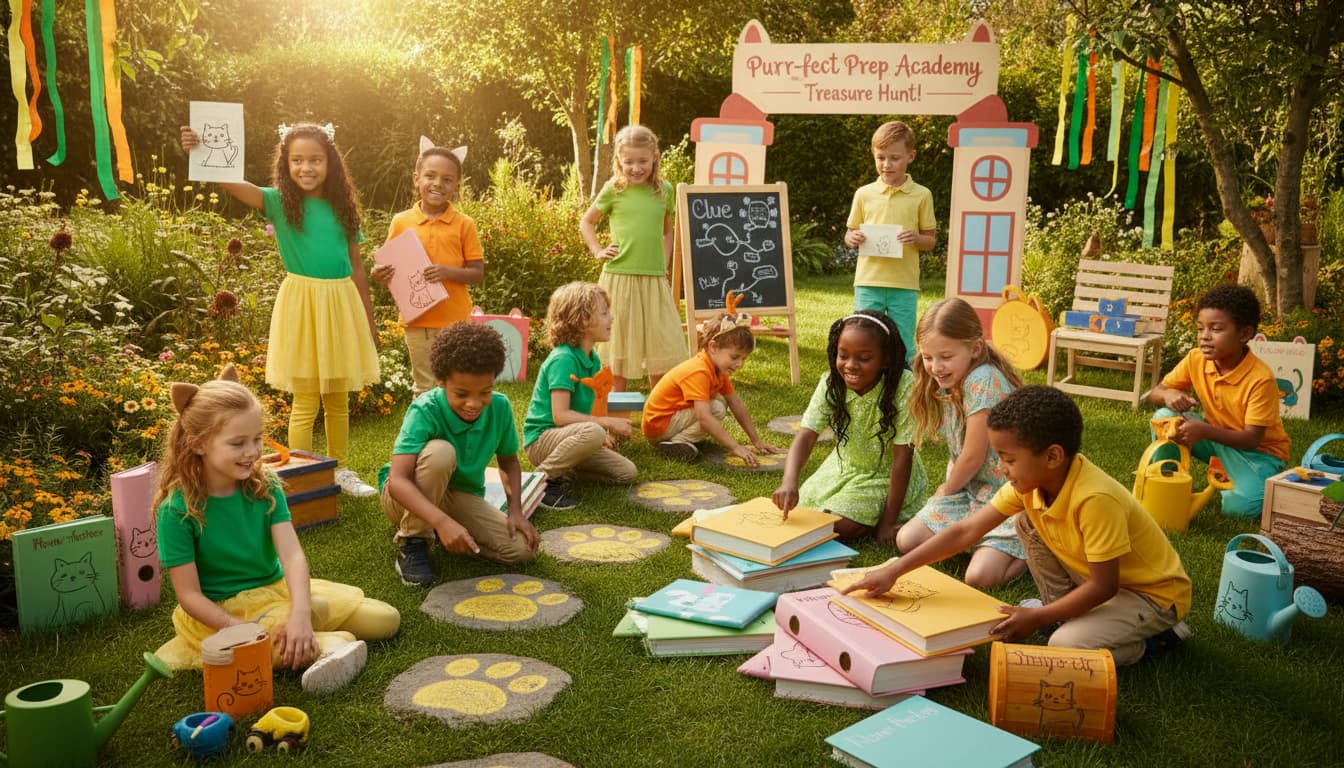
In short, what you will discover in this article: how to organize a Cat School treasure hunt that is fun and educational for children, with riddle ideas, a complete preparation guide, and practical resources to lead an original school treasure hunt.
1. Introduction: What is a 'Cat School' Treasure Hunt and Why Organize One
The Cat School treasure hunt is a playful activity that mixes adventure, riddles, and discovery around the theme of cats. Inspired by the equipment quest of the Cat School in the video game The Witcher 3, it is perfectly suited for children in school or after-school environments. Organizing this type of treasure hunt helps stimulate curiosity, cooperation, and team spirit while raising children's awareness of nature and felines.
This activity is ideal for a leisure center or a classroom because it combines fun and learning in an interactive setting. It also promotes motor skills, observation, and problem-solving, while offering an educational path suitable for different ages.
2. Educational Objectives and Targeted Skills
The main goal of the treasure hunt is to develop several key skills in children:
- Reading and comprehension through children’s riddles.
- Cooperation via team play in school settings.
- Awareness of nature and animals, especially through discovering the Cat School.
- Motor skills and observation with physical challenges and hidden clues.
- Autonomy and time management during the game.
These objectives fit perfectly within fun school activities and educational workshops about cats, thus enhancing the educational value of the hunt.
3. General Preparation
3.1 Define the Audience and Level (Age, Size)
First, it’s essential to know the group of children involved: their age (1st grade, 2nd grade, 3rd grade…), their number, and any specific needs. This helps adapt the difficulty of the riddles and the game duration.
3.2 Choose the Theme and Create a Narrative ('Cat School')
The theme should be clear and immersive. You can frame the hunt as an adventure where the children become apprentices of the Cat School, seeking to find magical objects or hidden blueprints. Take inspiration from the narrative structure of the quest in The Witcher 3, simplifying the steps to make them accessible.
3.3 Materials List and Estimated Budget
To organize the hunt, here is an indicative list:
- Printable treasure hunt sheets (riddles, maps, clues)
- Themed accessories (small feline objects, cards, compasses)
- Equipment for physical activities (ropes, hoops)
- Pens, sheets, and supports for noting answers
- Possibly tablets or QR codes for a digital version
The budget will depend on the number of children and chosen materials, but it’s possible to run an effective treasure hunt with minimal resources.
4. Designing the Riddles and Clues
4.1 Types of Riddles (Logic, Reading, Observation, Physical Activities)
To keep interest alive, vary the types of riddles:
- Logic: simple puzzles, sequences to complete.
- Reading: riddles or short stories to understand.
- Observation: find details in the environment.
- Physical activities: small motor challenges or relays.
4.2 Example Riddles by Level (1st Grade / 2nd Grade / 3rd Grade...)
- 1st Grade: match pictures of cats to their names, count objects.
- 2nd Grade: solve short riddles, read simple clues.
- 3rd Grade: more complex puzzles, multi-step riddles.
4.3 Printable Templates and Sheet Layout
Prepare clear sheets with illustrations and spaces for answers. Use an airy and playful layout suited for the children’s ages. You can find ready-made templates online or create your own.
5. Day-of Execution
5.1 Setup and Spotting Zones (Indoor / Outdoor)
Choose locations where clues will be hidden, ensuring safety and ease of access. Alternate between indoor and outdoor areas to vary the experience.
5.2 Safety Instructions and Supervision
Clearly explain the rules to the children, emphasize safety, and ensure constant supervision. Plan for adults to oversee each team.
5.3 Time and Team Management
Divide children into small groups to encourage team play. Set a reasonable duration (30 to 60 minutes) and plan intermediate stages to pace the activity.
6. Variations and Adaptations
6.1 Digital Version (QR Codes, Tablets)
To modernize the hunt, integrate QR codes to scan for clues or videos. This can also facilitate answer management.
6.2 Adaptation for Students with Special Educational Needs
Simplify riddles, offer visual or oral aids, and adjust the duration according to the children’s abilities.
6.3 Quick / Long / Competitive Versions
Depending on available time, create a shorter version with fewer steps or a longer, more immersive one. You can also organize a competitive rally with rankings.
7. Downloadable Resources and Ready-to-Use Kits
To save time, several websites offer themed treasure hunt kits. You can also take inspiration from the Cat School quest mechanics in The Witcher 3, as detailed on SuperSoluce, to create a path with riddles, puzzles, and challenges adapted for children.
8. Post-Activity Review and Learning Assessment
After the hunt, organize a sharing moment to gather the children’s feedback and assess the skills developed. This helps adjust future activities and highlight successes.
9. FAQ and Practical Tips (Mistakes to Avoid, Preparation Tricks)
- Do not underestimate the time needed for setup.
- Adapt the difficulty of riddles to the children’s actual level.
- Have a backup plan in case of bad weather.
- Encourage cooperation rather than excessive competition.
- Use simple but themed materials to strengthen immersion.
10. Conclusion and Call to Action
Organizing a Cat School treasure hunt is an excellent way to offer an original after-school activity mixing play, learning, and discovery. To make your preparation easier, feel free to download a ready-to-use kit or get inspired by available resources. To deepen your knowledge about cat care, also check out our comprehensive guide to choosing the ideal brush for long-haired dogs and cats and optimize their wellbeing.
Take action and make this treasure hunt an unforgettable moment for the children!